How it works
A carriage that meets the rocket halfway
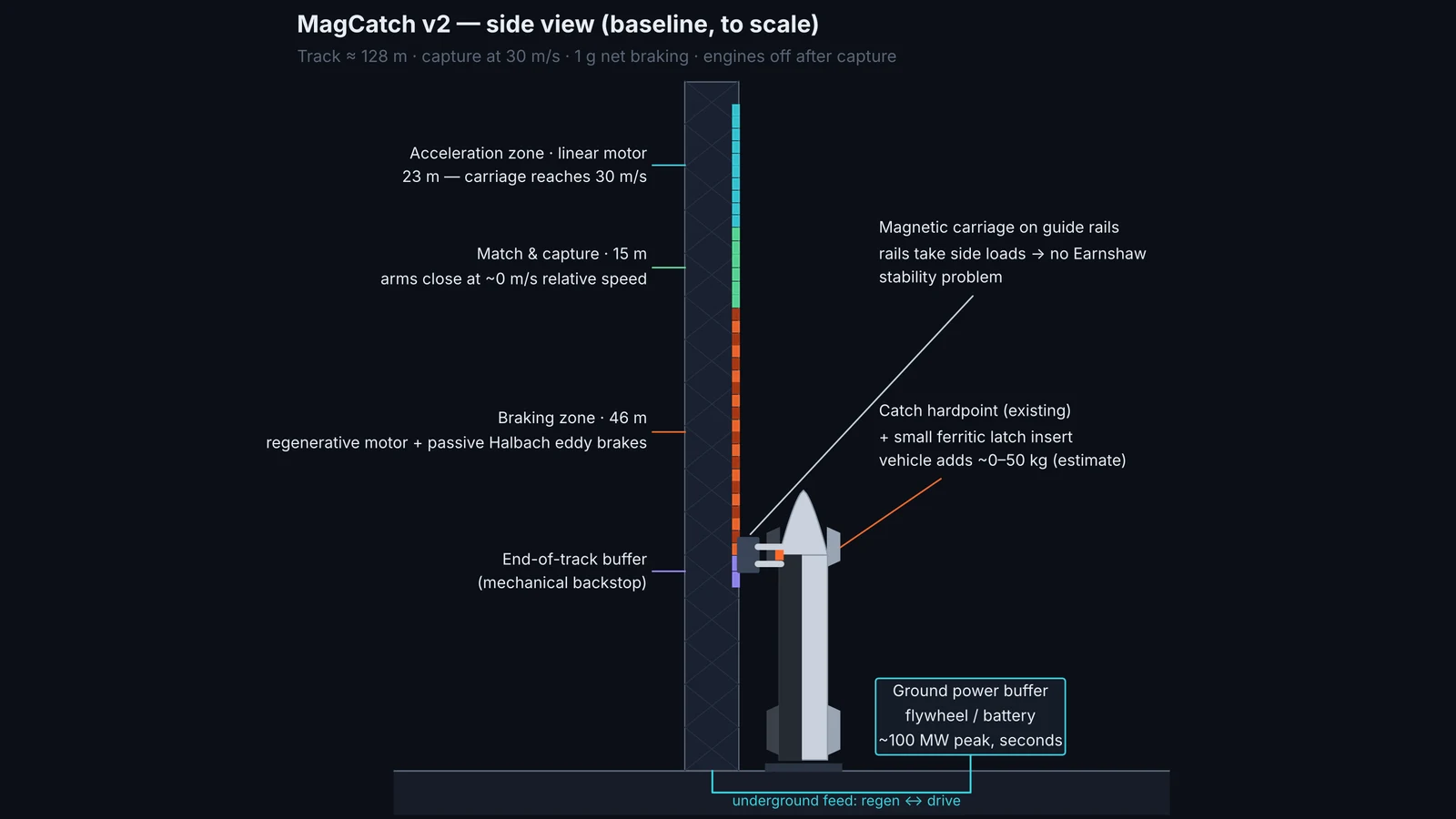
The track is about 128 m tall, split into four zones. Each zone does one job, and the rocket's own hardware is limited to the hardpoints it already uses for a tower catch.
The landing sequence
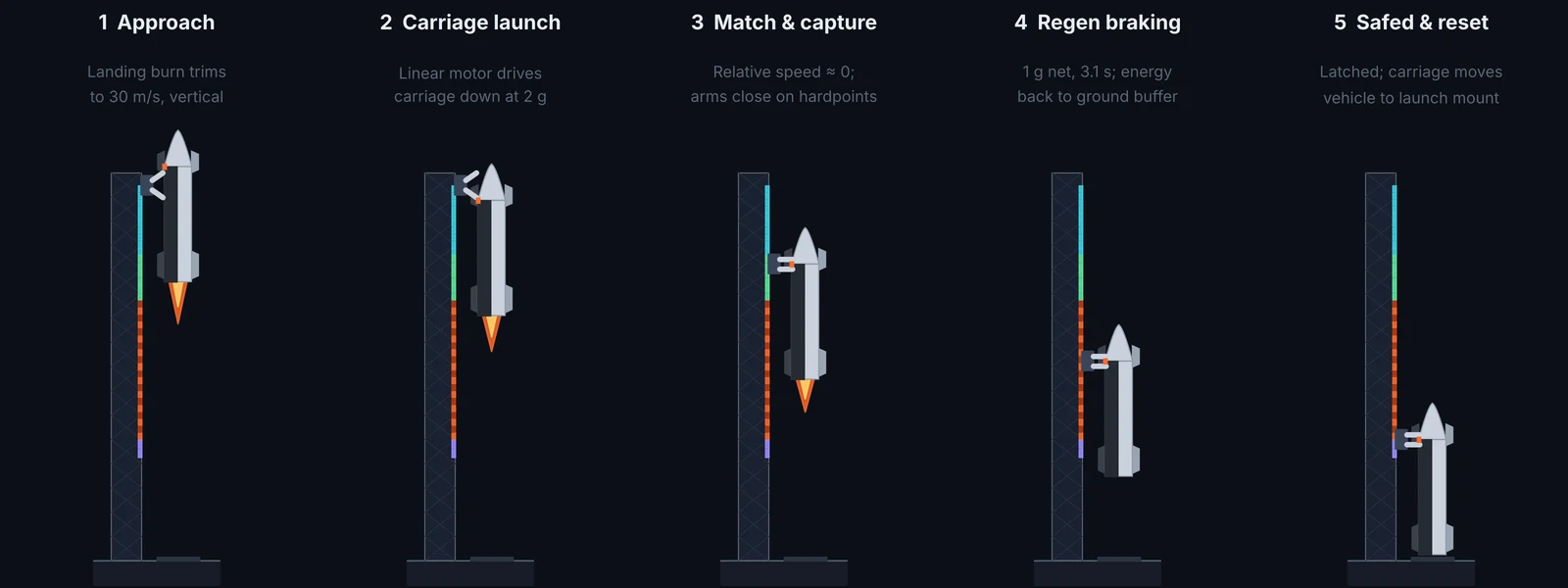
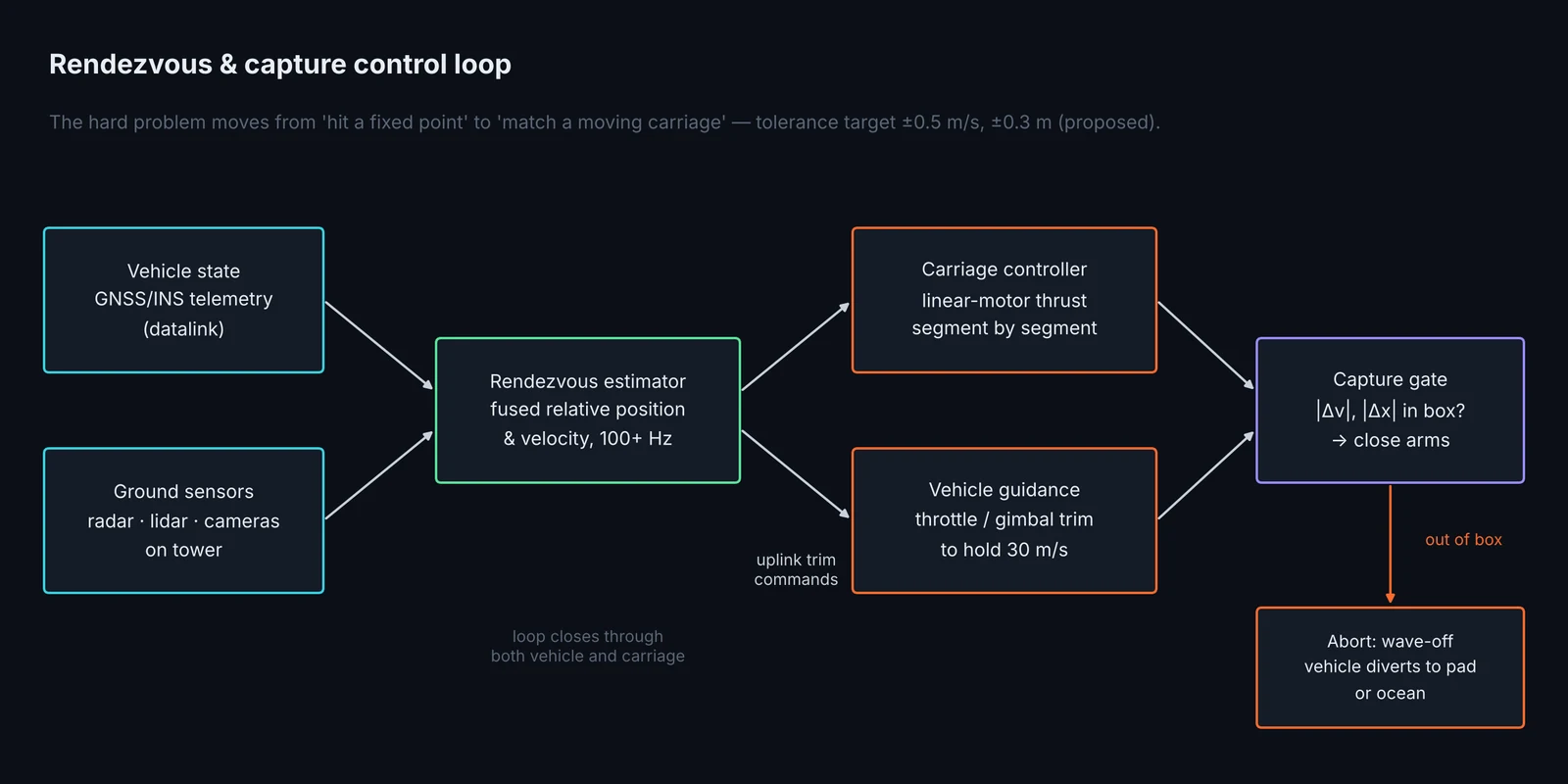
The hard step is the rendezvous: the vehicle holds a steady 30 m/s while the carriage accelerates to meet it. Once the speeds match, the catch itself is gentle.
Two ways to brake, one of them needs no power
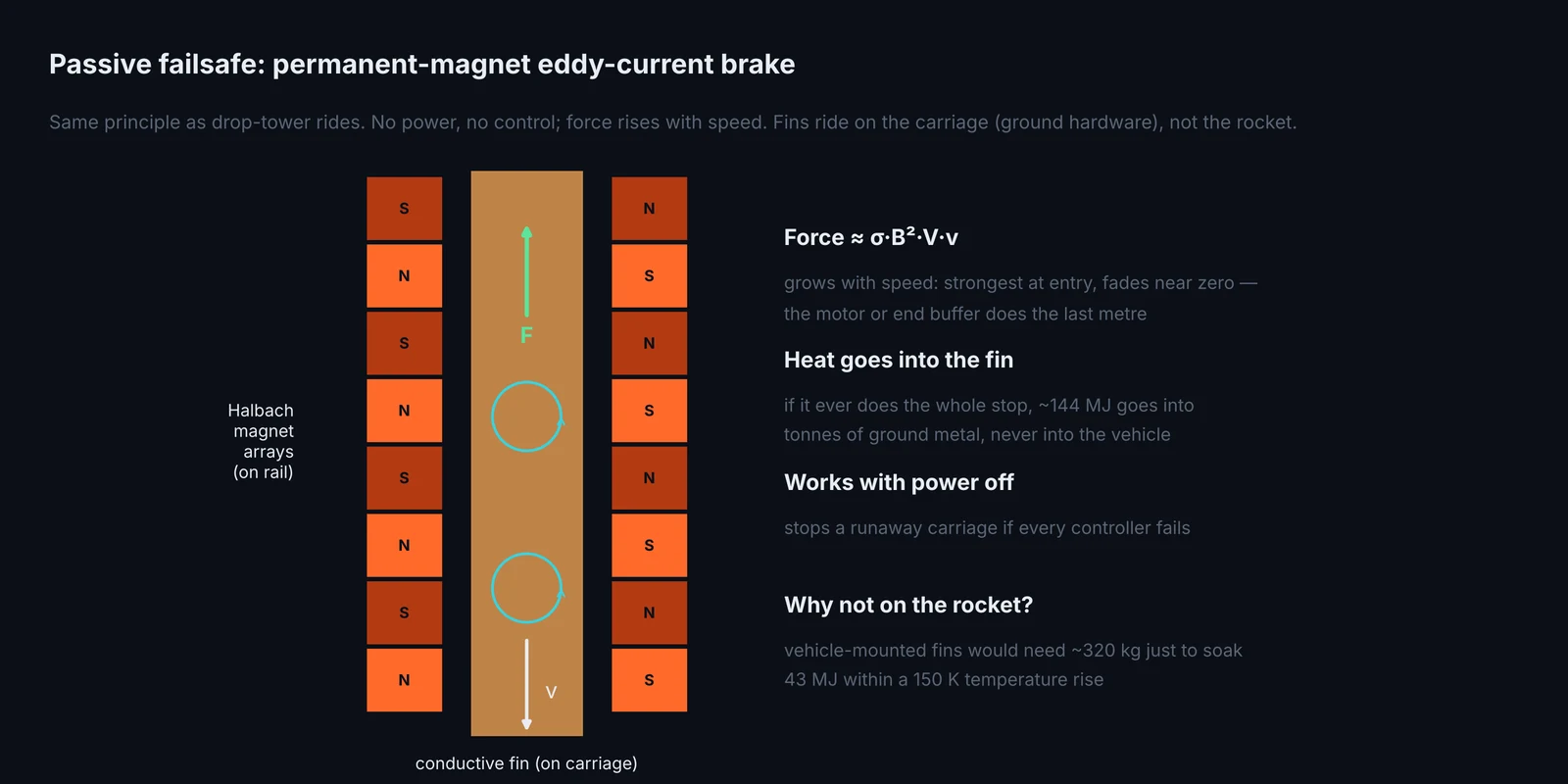
In normal operation, linear synchronous motor segments brake the carriage and return the energy to storage. If every power supply and controller fails, permanent-magnet eddy-current brakes along the lower track still stop it.
Power: sized for seconds, not hours
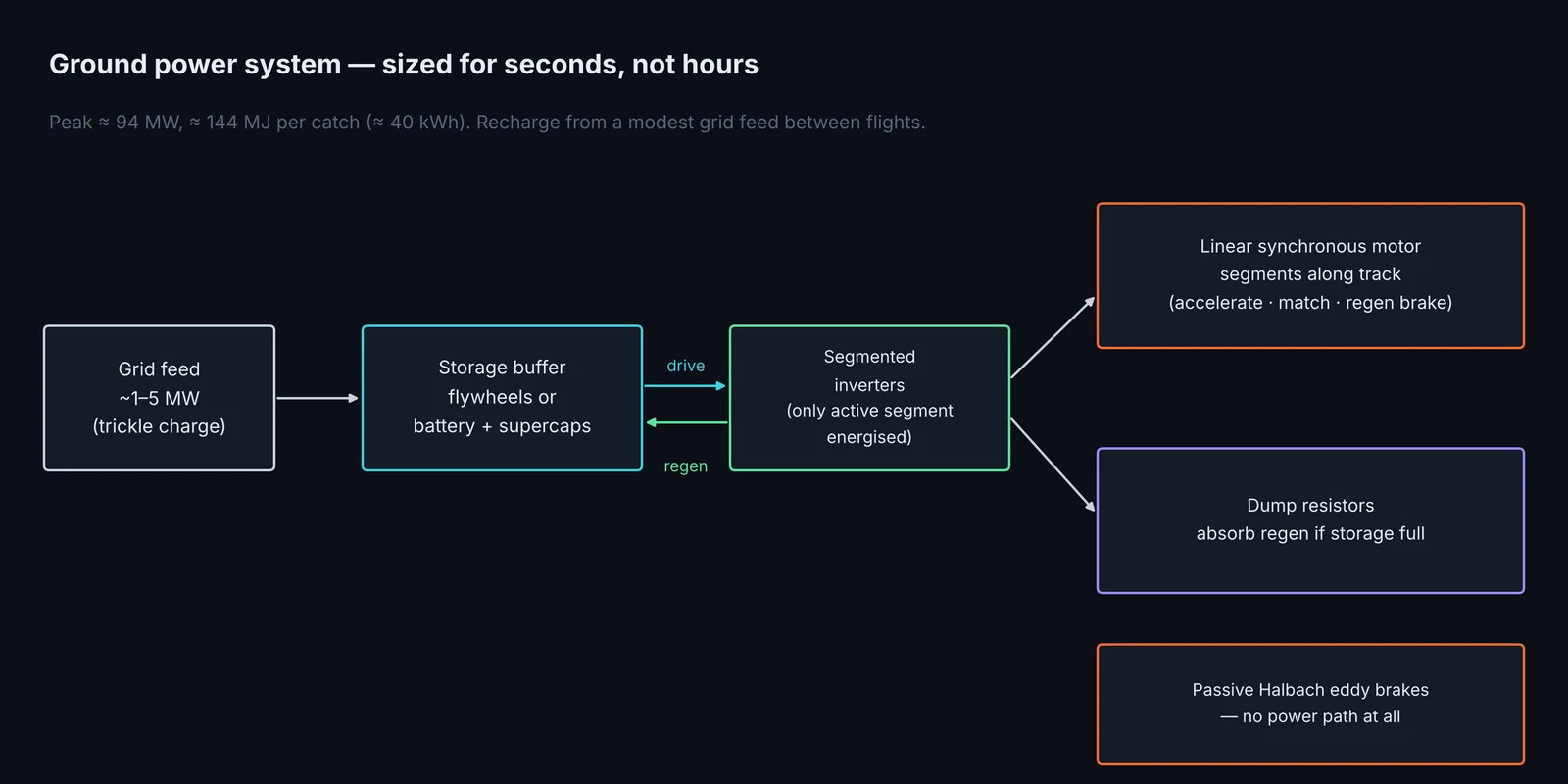
A catch needs about 94 MW at its peak but only about 144 MJ in total, roughly 40 kWh. A flywheel or battery buffer delivers that and recharges from a modest grid feed in minutes.
Rendezvous and capture control
The guidance problem changes from "hit a fixed point" to "match a moving carriage." The arms close only inside a capture gate, proposed as within ±0.5 m/s and ±0.3 m. Outside the gate, the vehicle keeps its engines running and waves off.
Want the sizing behind this?
Loads, power, capture-speed trade, mass budget and the open questions.